Repeated failed IVF cycles are physically and emotionally taxing. It’s normal to feel discouraged, and you aren’t alone in this experience. Recurrent implantation failure is a common diagnosis among IVF patients, and even multiple failures doesn’t necessarily mean that pregnancy is impossible.
In this article, we’ll define recurrent implantation failure, its causes, and offer considerations for next steps you can take. If you’re thinking, “I’ve had 3 IVF failed cycles, what next?” or, “Why does implantation keep failing for me?” then this is the article for you.
Recurrent implantation failure (sometimes referred to as repeated implantation failure or RIF for short) has no universally accepted definition. It has historically been defined as failure after 3 or more embryo transfers, or after multiple high quality (euploid) embryo transfers.
The European Society for Human Reproduction and Embryology (ESHRE) defines RIF as:
“…the scenario in which the transfer of embryos considered to be viable has failed to result in a positive pregnancy test sufficiently often in a specific patient to warrant consideration of further investigations and/or interventions.”
Embryo quality matters when diagnosing RIF. Embryos and specifically their genetics play an important role in implantation. If you’ve experienced implantation failure and didn’t have your embryo(s) tested, it’s possible that embryo quality may be a contributing factor. It’s best to rule out embryos as the issue before pursuing more specialized diagnosis and treatment options. Preimplantation genetic tests for embryos like PGT-A are often a standard part of IVF treatment.
If you have experienced multiple failed implantations even after PGT-A has determined your embryos to be good quality, your doctor may diagnose you with RIF.

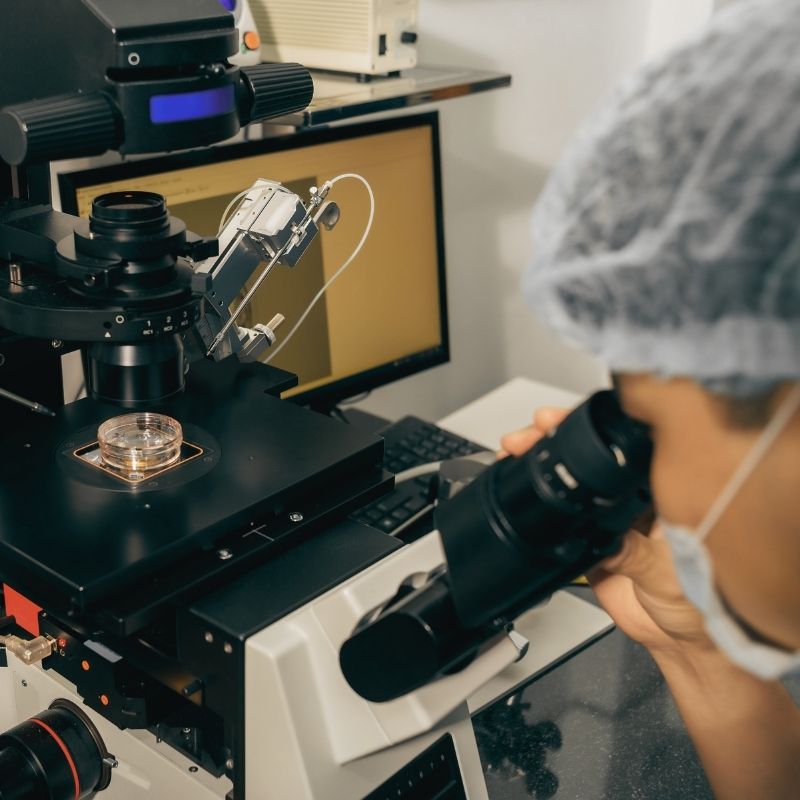
Diagnosis of recurrent implantation failure used to focus on the number of failed cycles, but modern definitions factor in embryo genetics and age. Even under ideal conditions, implantation is probabilistic, meaning its success cannot be guaranteed.
If you’ve experienced repeated failed embryo transfers, especially using good quality, PGT-A-tested embryos, you and your doctor may want to consider additional, more individualized testing options. Some newer PGT-A tests like Pixl have expanded testing capabilities that can identify chromosomal issues that don’t show up on other PGT-A tests.
If embryos aren’t the issue, transfer timing is another variable that can be looked at. Endometrial receptivity tests identify your optimal window of implantation (WOI), which can vary among individuals.
There are several factors that can contribute to failure in IVF treatment. Understanding some these can help you advocate for yourself. This way you and your doctor can pursue the right investigations to identify the underlying causes.
As discussed earlier, embryo quality and chromosomal issues in the embryo are one of the most common IVF failure reasons. Aneuploidy, specifically, is one of the leading causes of implantation failure.
Examining the morphology (shape and appearance) of embryos is the baseline analysis that embryologists use, but it can’t give the whole story. An embryo that looks perfect under the microscope doesn’t guarantee a successful implantation. That’s why genetic testing like PGT-A is important for screening the best quality embryos for transfer.
Just as the seed (embryo) must be of good quality to implant successfully, so too does the environment it implants in. There are number of both common and uncommon uterine factors that can make it more difficult for an embryo to implant successfully.
More commonly evaluated factors:
· Polyps
· Fibroids
· Chronic endometritis
· Thin endometrium / uterine lining
Less common but important conditions:
· Adhesions
· Structural abnormalities
For most women, their window of implantation (WOI) occurs between days 19 and 21 of their menstrual cycle. But that’s not true for everyone – research shows that 10-20% of women have a WOI that occurs earlier or later than average. If your embryo is transferred at a time that does not align with your WOI – even if your embryo is of good quality – there is a high risk of implantation failure.
[GRAPHIC] Implantation timing chart (don’t need the full uterus diagram)
Luckily, there are tests that help identify your personal WOI to guide transfer timing. Endometrial receptivity tests like ora® Non-Invasive Endometrial Receptivity Test are genetic tests that analyze biomarkers that reflect the status of the endometrium. Historically, these tests required a mock cycle and endometrial biopsy, but newer tests like ora® can identify your WOI using only a simple blood sample.
If embryo quality, uterine conditions, and timing are ruled out as potential factors, there are hormonal, metabolic, and lifestyle factors that may be examined.
· Thyroid disease causes hormonal imbalances that can affect ovulation and endometrial receptivity.
· Insulin resistance may disrupt hormone balance and implantation.
· PCOS / PMOS can affect ovulation, hormone levels, and overall fertility health.
· Inflammation may interfere with embryo implantation and receptivity
· Lifestyle contributors such as stress, smoking, lack of sleep, and nutrition can all influence IVF outcomes.
Analysis of the uterine environment may give clues as to why you are experiencing recurrent implantation failure. Endometrial thickness and status are both indicators of implantation potential, and there are multiple methods available to perform these analyses.
During menstruation the uterine lining (also known as the endometrium) thickens to create the ideal environment for embryo implantation. Because of this, clinics often monitor endometrial thickness for IVF patients. Different thicknesses give different signals of how ready the uterus is for an embryo.
· <6–7 mm: Often considered thin and may be associated with lower implantation rates
· 7–8 mm: Common minimum target for many IVF clinics
· 8–12 mm: Frequently considered an optimal range
· >14 mm: Sometimes considered excessively thick, though outcomes can vary
It’s important to note that while endometrial thickness is one indicator of readiness, it is not the only one to consider.
A thin womb lining means that the endometrium is unable to build up the ideal thickness for implantation. This can be caused by several factors, including low estrogen response, inflammation, scarring, and reduced blood flow.
Regardless of the cause, a too-thin endometrium can impact the chances of successful implantation and should be both assessed and addressed.
A hysteroscopy is one way to assess the uterine environment for issues that might be causing repeated implantation failure. Hysteroscopy is a minimally invasive procedure in which a physician examines your uterus to diagnose any abnormalities.
Hysteroscopy can be used for detecting polyps, fibroids, adhesions, inflammation, structural irregularities, and other uterine conditions – all potential causes of implantation failure. Hysteroscopy and IVF often go together, which is why it may be recommended for even non-RIF patients.
An emerging area of research is immune factors in IVF. These factors are relatively new, so still under-researched and sometimes controversial; however, they come up frequently enough in patients’ online research that they’re important to address.
M2 testing is a newer type of genetic screening sometimes used in IVF to evaluate the ANXA5 M2 haplotype, a genetic variant that has been associated in some studies with recurrent miscarriage, implantation failure, and pregnancy complications. Testing is typically performed for both parents using a saliva sample.
The theory behind M2 testing is that this genetic variant may affect placental development and implantation. However, research in this area is still emerging, and M2 testing is not currently considered a standard part of IVF treatment. While some clinics may offer it for patients with recurrent implantation failure or recurrent pregnancy loss, more research is needed to fully understand which patients may benefit most.
Natural killer (NK) cells are part of the immune system and may play a role in implantation and early development. Some IVF research related to RIF has linked abnormal uterine NK cell activity with recurrent implantation failure – this is why some clinics will test for them.
However, evidence remains mixed, with no clear consensus reached. For this reason, routine NK cell testing or immune-based treatments are not universally recommended. It’s best to have a discussion with your fertility doctor if you are interested in examining natural killer cells in IVF treatment.
Like NK cells, intralipid infusion IVF treatment is another area that does not have enough supporting evidence to be universally recommended. Intralipid infusion is an immune-based IVF add-on sometimes offered to those suffering recurrent implantation failure. It is thought to help regulate immune activity, including natural killer cell activity, but research remains mixed.
Intralipid infusion is generally considered low risk, but there can be side effects. It is best to talk with your fertility specialist about your individual situation to decide if this is worth exploring in your treatment.
If you have been diagnosed with RIF and are interested in pursuing some of these lesser researched treatments, here are some questions to ask your doctor:
· What is the quantity and quality of evidence supporting this treatment option?
· What are the potential risks of this treatment option?
· How much will it add to my IVF treatment in terms of cost?
· Does this treatment option align with my diagnosis?
Perhaps the simplest way to proactively support your IVF treatment is through adjusting your lifestyle. Finding ways to improve habits related to nutrition, exercise, sleep, and stress management can go a long way to improving outcomes.

Healthy, fertility-supporting nutrition is one easy-to-implement step you can take. Anti-inflammatory foods, healthy fats, vegetables, legumes, and fish are all foods that provide important nutrients that support fertility and uterine health.
Some Mediterranean diet IVF studies have suggested a possible association between this specific diet (which includes all the above food types) and improved fertility outcomes.
Beyond diet, other lifestyle aspects can help improve overall health and support fertility.
· Moderate physical activity helps blood circulation, keeps hormones in balance, and manages stress levels.
· Adequate sleep of 7-9 hours may help support overall reproductive and hormonal health.
· Counseling and support groups can be particularly beneficial for RIF patients, as the emotional impact of repeated IVF failure can be severe.
Supplements can provide additional health and fertility support beyond diet. Prenatal vitamins, Vitamin D, and other supplements that your fertility doctor may recommend on an individualized basis can cover deficiencies in your current diet.
A common question that comes up with IVF patients is if it’s possible to achieve spontaneous pregnancy after failed IVF treatment. In other words, can you get pregnant the old-fashioned way, even after repeated implantation failure? The answer is yes, it is possible!
There are number of reasons why spontaneous pregnancy after failed IVF treatment can occur:
· Fertility can change over time. While with age it typically declines, other factors (e.g. lifestyle changes, recovery from certain conditions) can cause improvement in fertility.
· IVF treatment can be stressful, and that stress can negatively impact fertility. Outside of treatment, reduced stress can make it easier to get pregnant naturally.
· Some infertility diagnoses are probabilistic, not absolute. While some conditions can make pregnancy less likely, they do not eliminate the possibility entirely.
Whether you’re discouraged by an RIF diagnosis or celebrating a spontaneous pregnancy after repeated failures, if you wish to try to get pregnant again, getting proper evaluation is important.
There are many options available for more personalized care and diagnosis. From undergoing a hysteroscopy to identify unclear conditions, to endometrial receptivity testing for identifying your ideal transfer window – more information helps you make better decisions.
The two weeks following embryo transfer are among the most anxiety-inducing as you wait to find out if implantation was successful. It’s very common to stress over symptoms that present themselves, even those that are completely normal.
Symptoms can vary widely and often aren’t reliable indicators on their own. So rather than look at symptoms of failed implantation, let’s look at what can be expected.
Here are some of the most common (and totally normal) symptoms IVF patients experience after embryo transfer:
· Spotting
· Cramping
· Breast tenderness
· Fatigue
· Bloating
However, if you begin to experience severe pain or heavy bleeding from the vagina after embryo transfer, contact your care team. These can be symptoms of complications that should be evaluated as soon as possible.
Due to the variety of symptoms and possible causes, self-diagnosis based on symptoms is not reliable. Progesterone can have several side effects; pregnancy symptoms can mimic the same symptoms as failed cycles, and symptoms of PMS and of early pregnancy can overlap.
Because of this, Beta-hCG testing is the only truly reliable confirmation of implantation success.
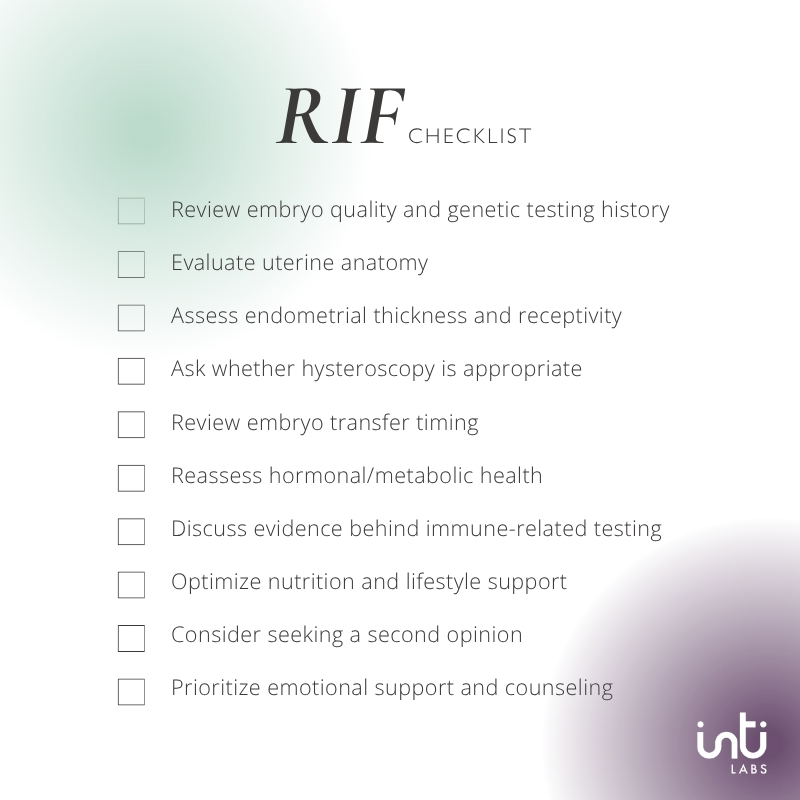
We’ve given you a lot of information to sort through and consider. So what’s the TL;DR? See below for some practical next steps you can pursue after repeated IVF failure:
· Review embryo quality and genetic testing history
· Evaluate uterine anatomy
· Assess endometrial thickness and receptivity
· Ask whether hysteroscopy is appropriate
· Review embryo transfer timing
· Reassess hormonal/metabolic health
· Discuss evidence behind immune-related testing
· Optimize nutrition and lifestyle support
· Consider seeking a second opinion
· Prioritize emotional support and counseling
Recurrent implantation failure can be discouraging, but repeated failed cycles do not necessarily mean pregnancy is impossible. There are many factors that can contribute to implantation failure, and further testing may help identify solvable issues related to embryo quality, uterine health, transfer timing, hormones, or overall wellness.
As fertility medicine advances, more personalized testing and treatment approaches are helping guide decision making. If you’ve experienced repeated implantation failure, talking with your fertility specialist about individualized next steps — including options like personalized embryo transfer (pET) timing — may help you better understand your path forward.
Recurrent implantation failure (RIF) refers to repeated unsuccessful embryo implantation despite multiple embryo transfer attempts. While there is no universally accepted definition, it is commonly used to describe cases where pregnancy has not occurred after several transfers, particularly when good-quality or genetically tested embryos have been used.
After 3 failed IVF cycles, fertility specialists will often conduct a more detailed evaluation to identify possible contributing factors. This may include reviewing embryo quality, assessing the uterine environment, evaluating endometrial receptivity, investigating hormonal or metabolic conditions, and considering additional diagnostic testing to guide future treatment decisions.
Some of the most common IVF failure reasons include chromosomal abnormalities in embryos, uterine abnormalities such as polyps or fibroids, implantation timing issues, hormonal imbalances, and underlying health conditions. In many cases, multiple factors may contribute to implantation failure rather than a single identifiable cause.
Yes. Spontaneous pregnancy after failed IVF is possible for some patients. While IVF failure may indicate underlying fertility challenges, many infertility diagnoses reduce the likelihood of pregnancy rather than making pregnancy impossible. However, patients experiencing repeated IVF failures should still seek medical evaluation to better understand their individual circumstances.
There are no definitive symptoms of failed implantation. Common experiences after embryo transfer—including cramping, spotting, fatigue, bloating, and breast tenderness—can occur whether implantation is successful or not. A beta hCG blood test is the most reliable way to confirm whether implantation has occurred.
Many fertility clinics consider an endometrial thickness of approximately 7–14 mm to be favorable for embryo transfer, with 8–12 mm often viewed as an optimal range. However, endometrial thickness is only one factor influencing implantation success, and other aspects of endometrial receptivity are also important.
Yes. A thin womb lining, also known as a thin endometrium, may reduce the chances of successful embryo implantation. Possible causes include hormonal imbalances, inflammation, scarring, or reduced blood flow to the uterus. Fertility specialists may recommend additional evaluation or treatment when a thin lining is identified.
Hysteroscopy can help identify uterine abnormalities that may affect implantation, such as polyps, fibroids, adhesions, or structural irregularities. While the procedure itself does not guarantee pregnancy, identifying and treating underlying uterine issues may improve the chances of successful implantation in some patients.
Intralipid infusion is an immune-based IVF add-on treatment that is sometimes offered to patients with recurrent implantation failure or recurrent pregnancy loss. It is thought to help regulate immune activity, but current research remains mixed and it is not universally recommended. Patients should discuss the potential benefits, risks, and costs with their fertility specialist.
Natural killer (NK) cells are immune cells that may play a role in implantation and early pregnancy. Some research has suggested a possible association between abnormal uterine NK cell activity and recurrent implantation failure, but evidence remains inconclusive. As a result, routine NK cell testing and immune-based treatments are not currently universally recommended by major fertility organizations.