- Higher chance of success and reduced chance of miscarriage
- Expanded analysis that catches that traditional PGT-A tests miss
- Fewer misclassified and discarded embryos
- Greater confidence in embryo selection and transfer decisions
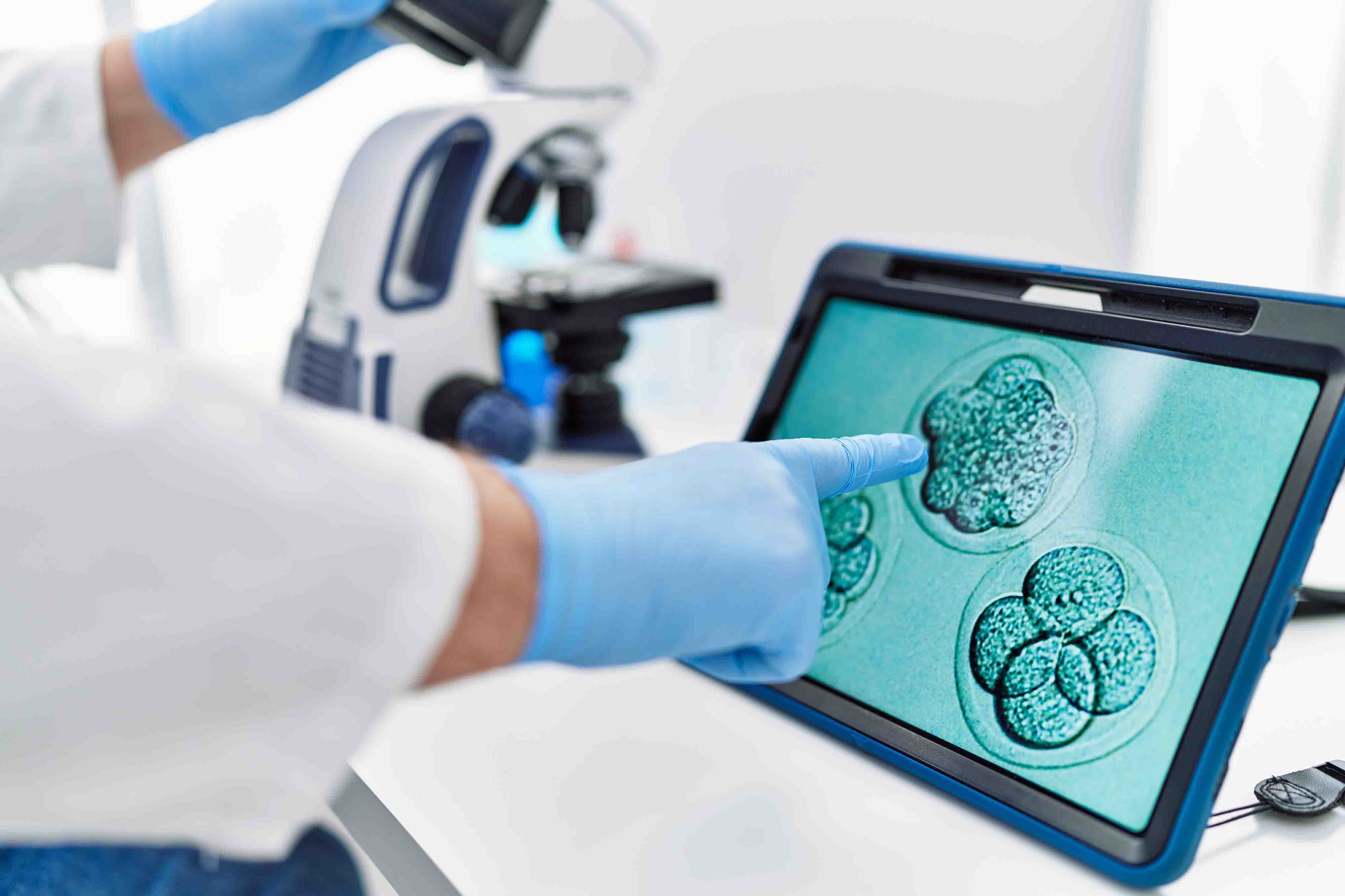
During IVF, embryos may have the wrong number of chromosomes, also known as aneuploidy. This is a leading cause of implantation failure and miscarriage. Preimplantation Genetic Testing for Aneuploidy (PGT-A) helps you and your doctor choose embryos with the right number of chromosomes, giving you a better chance at a healthy pregnancy.
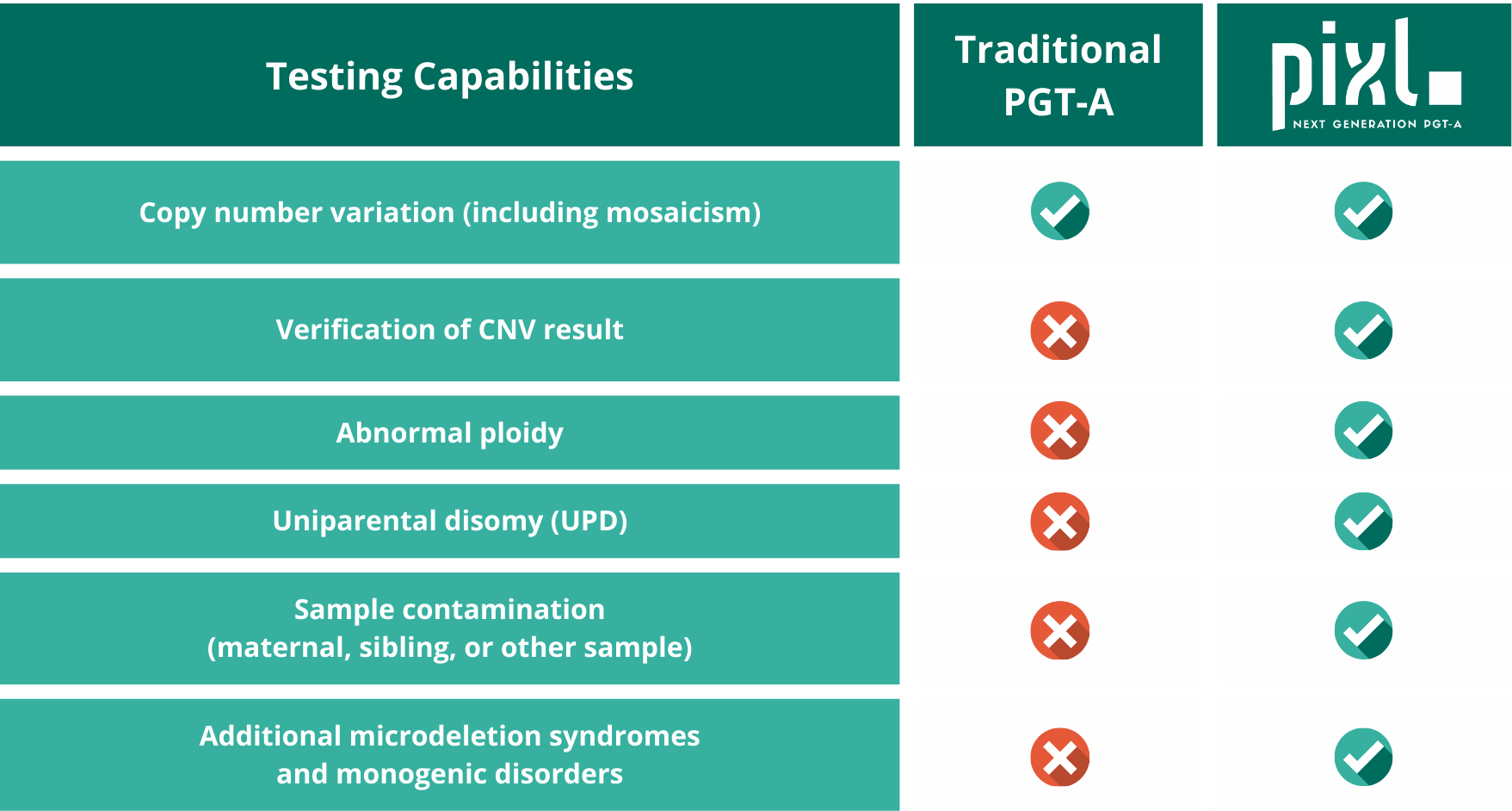
But not all PGT-A tests are the same. Traditional PGT-A methods can misclassify embryos due to lower accuracy, leading to the discard of embryos that maybe have been viable. Additionally, due to Traditional PGT-A's limitations, it can also miss out on important irregularities and chromosomal abnormalities. Every embryo is precious, and this risk is especially important for patients who only have a few embryos to begin with.

PGT-A Pixl doesn’t rely on just a single analysis. It uses both chromosome counting (the traditional PGT-A method) and thousands of carefully selected genetic markers (SNPs) to confirm results.
Because it’s more accurate, it reduces misinterpretation of embryo health—meaning more of your embryos may be considered suitable for transfer.

Beyond standard aneuploidy screening, PGT-A Pixl also detects:
• Ploidy status like triploidy or haploidy, which often lead to miscarriage
• Uniparental disomy (UPD), when both copies of a chromosome come from one parent
• Targeted microdeletions and monogenic mutations linked to common genetic conditions (coming soon)

Sometimes test results fall in between normal and abnormal, categorized as mosaicism. Many of these embryos can still lead to healthy pregnancies. PGT-A Pixl’s extra SNP analysis help clarify these results so embryos aren’t discarded unnecessarily.

Women of advanced maternal age (35+), where risk of aneuploidy is greater

Patients with a history of implantation failure or miscarriage

Families with a history of genetic abnormalities

Patients who have had repeated failed IVF cycles even with traditional PGT-A
(SNP-Enhanced PGT-A)
Identification & Verification of:
• Euploidy
• Aneuploidy
• Mosaicism
• Ploidy Status
• Uniparental Disomy (UPD)
(Targeted Microdeletions and Monogenic Mutations)
Microdeletion Syndromes:
• Cri-du-Chat
• DiGeorge
Monogenic mutations:
• Thalassemia (HBA1, HBA2, HBB)
• G6PD deficiency (G6PD)
• Hearing loss-associated mutations (GJB2, SLC26A4, OTOF)
(PGT-A Plus and PGT-M Focus)
Includes all identification and verification features of PGT-A+ and PGT-M Focus
1. A few cells are carefully taken from your embryo in the lab.
2. DNA is analyzed with advanced sequencing that includes SNP analysis.
3. Results guide you and your doctor in selecting the embryo(s) with the greatest chance of success
PGT-A Pixl improves selection but doesn’t guarantee pregnancy or replace prenatal diagnostic tests. Your doctor will combine PGT-A Pixl results with other factors like your age, history, and embryo appearance to guide your treatment plan.